
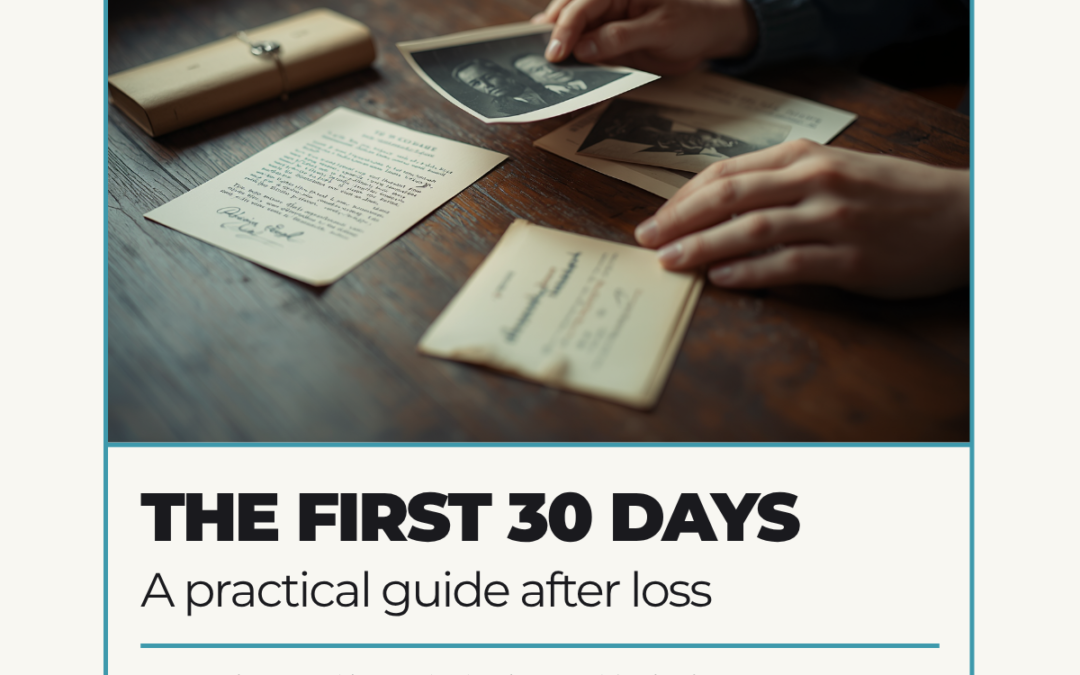
What to Do in the First 30 Days After Someone Passes: A Georgia Probate Guide
When someone you love passes away, people often expect there to be a moment where everything becomes clear. Instead, most families experience the opposite.
There are emotions, logistics, paperwork, and a surprising number of decisions that seem urgent all at once. Family members may immediately start asking questions: Do we need probate? Can we access bank accounts? What happens to the house? Who pays the bills? Where do we even begin?
If you are in Georgia and helping manage affairs after a death, the good news is that you do not have to solve everything in the first week. In fact, trying to do too much too quickly can create unnecessary stress and mistakes.
The first 30 days are usually about protecting information, understanding what exists, and putting yourself in position to make good decisions.
Here is where to start.
First, take care of immediate practical needs.
Before worrying about probate paperwork, focus on the basics. Make sure the funeral or memorial arrangements are handled, secure the home if it is vacant, care for pets, gather mail, and make sure someone is monitoring important communications.
If there are automatic drafts coming out of accounts, resist the urge to immediately close everything. Many expenses continue after death and closing accounts too quickly can create problems.
At this stage, your job is not to distribute assets. Your job is to preserve them.
Second, locate the estate planning documents.
Look for originals or copies of important documents including:
- Last Will and Testament
- Revocable Trust
- Financial Power of Attorney (understand this generally ends at death)
- Advance Directive for Health Care
- Deeds
- Vehicle Titles
- Beneficiary designations confirmations
- Insurance policies
- Recent account statements
- Business documents
One of the most common misunderstandings in Georgia probate is assuming a Will avoids probate.
A Will usually does not avoid probate. A Will often tells the Probate Court who should be appointed and how assets should ultimately pass.
If someone says, “We found the Will, so we don’t need probate,” slow down and confirm before moving forward.
Third, order more death certificates than you think you need.
While many say this has changed because you have to submit things online in a lot of instances, you would be surprised who needs an original death certificate.
As a general planning point, families often need multiple copies to work through banking, investment accounts, life insurance, retirement assets, real estate, and administrative matters.
You may not use all of them, but needing more later can slow things down. We usually recommend 6. As a practical point, when you do receive the death certificate, step aside somewhere and slowly go through the entire certificate to make sure all names are spelled correctly, addresses are correct. Every little thing is correct. There are a surprising number of inaccuracies on death certificates.
Fourth, make a list of what the person owned and how it was owned.
This step changes everything.
Create a simple inventory. You do not need values yet. Start with categories:
Real estate
Bank accounts
Investment accounts
Retirement accounts
Life insurance
Vehicles
Business interests
Personal property
Then ask one question for each item:
How was it titled?
Ownership often determines whether probate is required.
Some assets may pass automatically through beneficiary designation or survivorship rights. Others may require probate administration through the Georgia Probate Court.
Do not assume every asset belongs in the estate.
Fifth, do not start distributing property.
Families often begin dividing jewelry, vehicles, furniture, cash, or household items almost immediately because everyone “knows what Mom wanted.”
This is where avoidable conflict starts.
Until authority is confirmed and obligations are understood, treat everything as belonging to the estate.
If probate will be opened, the Personal Representative (Executor or Administrator) generally has legal responsibility for handling assets appropriately.
Sixth, determine whether probate is actually needed.
Not every death in Georgia requires full probate.
Questions that help determine next steps include:
Was there a trust?
Was there a valid Will?
Were assets jointly owned?
Were beneficiaries named?
Are accounts already payable on death?
Did the deceased own real estate individually?
This is usually the point where families benefit from getting legal guidance because the answer is often more nuanced than people expect.
Seventh, create a communication plan for the family.
One person should become the point of contact.
That does not mean making decisions alone—it means organizing information and reducing confusion.
Decide:
Who is collecting documents?
Who is speaking with financial institutions?
How often will updates be provided?
Clear communication prevents misunderstandings that later become disputes.
Finally, remember that the first 30 days are not about finishing probate.
They are about creating order.
You do not need every answer immediately. You need the next right step.
Secure the assets. Gather the documents. Understand ownership. Confirm authority before acting.
Georgia probate can feel overwhelming in the beginning, but families who slow down and move intentionally usually make better decisions and experience fewer delays.
If you are unsure whether probate is required, whether a Will needs to be filed, or what authority someone actually has after death, getting clarity early often saves significant time and stress later.
We can help. We help families after a loved one has passed away determine what, if anything, needs to happen in probate or outside of probate.