
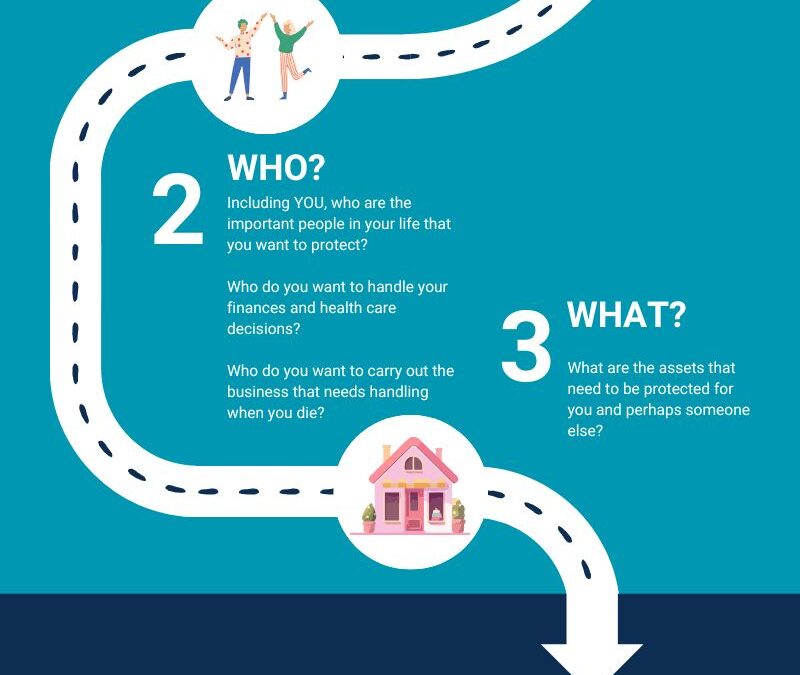
When most people begin thinking about estate planning, they instinctively focus on assets. The house. The retirement accounts. The business. The investment portfolio. But estate planning does not truly begin with property — it begins with people.
And the first person on that list may surprise you.
It is you.
In my work, I focus on women — often highly capable, professionally accomplished women such as attorneys, physicians, executives, entrepreneurs, and financial advisors — who are used to advising others, leading others, and solving complex problems. Yet when it comes to estate planning, many of these women tell me something striking: in traditional settings, they often did not feel like the focus of the conversation.
The plan may have been framed around the household balance sheet. It may have centered on tax strategy or asset structure. It may have defaulted to assumptions about spouses or traditional family roles. But rarely was the conversation centered on her — her autonomy, her relationships, her responsibilities, and her voice.
Estate planning should begin there.
You Are One of the Most Important People in Your Plan
Estate planning is often described as something you do “for your family,” and while that is absolutely true, it is also something you do for yourself. During incapacity, your estate plan protects your authority, your medical wishes, and your financial independence.
If you were unable to make decisions tomorrow, who would step in? Who would speak to doctors on your behalf? Who would manage your accounts? Who understands your values well enough to advocate for you under pressure?
Professional women, in particular, are accustomed to being the competent one — the decision-maker, the organizer, the stabilizing force. Yet many have never paused to ask who would step into that role for them. A thoughtful estate plan ensures that you remain at the center of your own life story, even during vulnerability. You are not simply preparing for what happens after death; you are protecting your voice while you are alive.
If You Have Children, They May Be at the Center — But Not Always
For mothers, minor children are often the most immediate priority. Naming guardians and structuring financial support is not just a legal exercise; it is a deeply personal decision about values, environment, and long-term stability. A plan allows you to guide their future in ways that reflect who you are and how you parent.
As children become adults, the questions evolve. Instead of guardianship, the focus may turn to how assets are distributed, whether protective trusts make sense, and how to balance equality with individual needs. Planning for adult children is less about control and more about foresight.
But not every woman has children, and that does not diminish the importance of planning. In fact, it often makes intentionality even more critical.
If You Do Not Have Children, Who Is Your Family?
Many professional women I work with are single, divorced, widowed, or simply child-free by choice. Some have built extraordinary careers and meaningful communities, yet in traditional estate planning conversations, their relationships are sometimes treated as secondary because they do not fit a conventional mold.
If you do not have children, who would step in during incapacity? Who inherits your assets? Who understands your values well enough to carry out your wishes?
You may have a spouse or partner. You may have siblings, nieces, nephews, or aging parents. You may have a lifelong friend who feels more like family than anyone related by blood. Without documentation, the law defaults to a hierarchy that may not reflect your real life.
Estate planning gives you the authority to define your family on your terms. It allows you to elevate the people who matter most to you, whether they are relatives or chosen family.
Spouses, Partners, and Complex Families
For women in marriages or long-term partnerships — particularly in second marriages or blended families — the most important people in the plan may include both a spouse and children from prior relationships. These dynamics require nuance. You may want to protect your partner while also preserving assets for your children. You may want to prevent unintended disinheritance or future conflict.
Clear, intentional planning creates structure where assumptions might otherwise create tension. It replaces ambiguity with direction.
Aging Parents and Those Who Depend on You
In some seasons of life, the most important people in your estate plan are not younger than you but older. Many professional women find themselves supporting aging parents financially or logistically while also managing careers and possibly raising children. If you are part of that “sandwich generation,” your absence could create significant disruption.
Planning allows you to consider how support continues and who understands the responsibilities you have been carrying. It recognizes that caregiving is part of your legacy, too.
The People You Trust to Act
Estate planning is not only about who receives assets. It is about who carries authority. The executor, trustee, financial agent, and health care decision-maker are among the most important people in your plan because they are the ones who step in during moments of vulnerability.
For many high-achieving women, this requires thoughtful reflection. Who is steady under pressure? Who communicates clearly? Who respects your boundaries and your values? Choosing decision-makers is not about obligation; it is about trust.
The Question Beneath the Question
When you ask who the most important people are in your estate plan, what you are really asking is: Whose lives are intertwined with mine in ways that would be deeply affected if I were gone?
For some, the answer begins with children. For others, it centers on a spouse, a friend, a sibling, or a parent. For many professional women, it also includes themselves — their autonomy, their dignity, and their carefully built independence.
Estate planning should not reduce you to a line item on a balance sheet or assume your priorities based on traditional roles. It should reflect your real life, your real relationships, and your real responsibilities.
When planning begins with people instead of paperwork, the process becomes clearer and more personal. The documents are simply tools that ensure your voice is heard, your decisions are respected, and the people — including you — who matter most are thoughtfully protected.
Because ultimately, the most important people in your estate plan are the ones whose stability, security, and well-being are connected to yours. And you deserve a plan that sees you clearly at the center of that story.