
People rarely wake up one morning excited to create an estate plan. The decision to call an estate planning attorney or send that first email usually comes after something shifts, something happened. Sometimes the shift is dramatic, and sometimes it is quiet, but almost always there is a moment when life feels more real, more fragile, or more complex than it did before.
It may have been the sudden loss of a friend. It may have been sitting in a hospital waiting room and realizing no one technically had authority to speak to the doctors. It may have been watching siblings struggle through a difficult probate process after a parent died without clear instructions. For some, it is the birth of a child that changes everything. For others, it is a divorce, a remarriage, a growing investment account, or simply a milestone birthday that brings clarity. The details vary, but the underlying realization is often the same: If something happened to me, would this be a mess for the people I love?
That question is what moves estate planning from the bottom of the to-do list to the top.
When someone reaches out to an estate planning attorney, they are not usually thinking about legal terminology. They are thinking about whether their family would face chaos or clarity. Often, they have seen firsthand what happens when there is no plan in place. They have watched delays stretch on for months in court. They have seen accounts frozen, disagreements escalate, and surviving spouses or adult children left trying to piece together someone else’s intentions. They are not calling because they enjoy paperwork; they are calling because they want to prevent unnecessary stress and confusion.
For many, the decision feels deeply personal. Something has made mortality less abstract. A health scare, even a minor one, can bring immediate perspective. Helping an aging parent navigate incapacity can reveal just how complicated things become without proper authority in place. Welcoming a new baby can awaken a protective instinct that was never fully felt before. Life events have a way of sharpening focus, and when that focus lands on responsibility, estate planning becomes an act of love rather than a legal obligation.
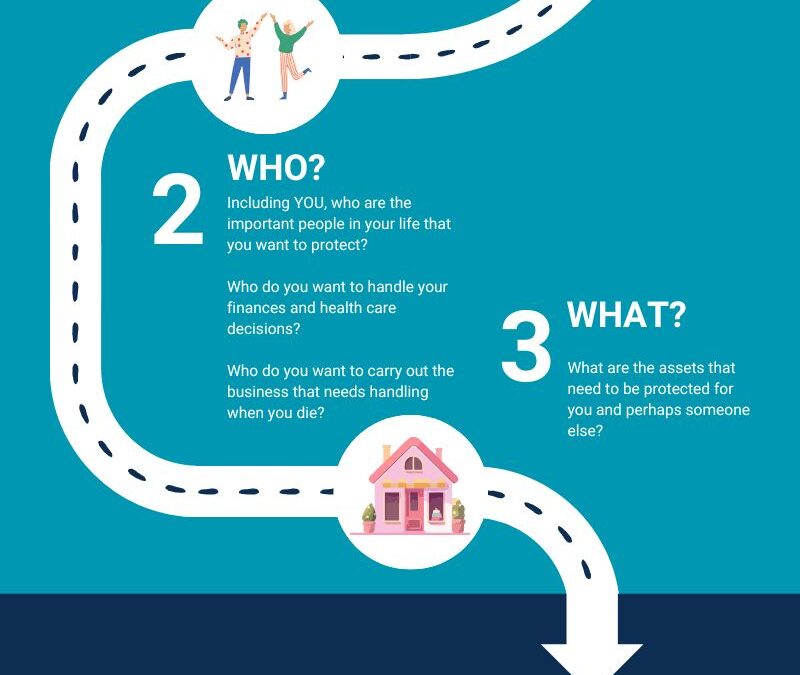
At its core, the person making that call wants their voice to be clear. They want to decide who would raise their children, who would manage their finances, who would step in during incapacity, and how their assets would ultimately be distributed. They do not want the state’s default rules to dictate outcomes that may not reflect their values or family dynamics. They want to remove ambiguity. They want to make intentional choices while they are calm and capable, instead of leaving those decisions to be interpreted later under emotional strain.
Just as importantly, they want to make things easier for the people they care about. Death is heavy enough without adding legal confusion to the weight of grief. When someone says, “I just want this to be simple for them,” what they really mean is that they want structure during a vulnerable time. They want a clear roadmap, a designated decision-maker, organized access to accounts, and a process that feels guided rather than chaotic. They want their family to focus on healing and honoring their life, not untangling uncertainty.
Sometimes the motivation is not prompted by crisis at all, but by growth. A new home, a business venture, a growing retirement account, or an inheritance can introduce complexity. With complexity comes responsibility. As assets increase or family structures evolve, the absence of planning becomes more noticeable. The question shifts from “Do I really need this?” to “How do I make sure this is handled correctly?” The call is not driven by fear but by foresight.
Underlying all of these motivations is a desire for peace of mind. There is a quiet mental load that comes from knowing something important remains unaddressed. Estate planning often sits in the background of a person’s thoughts for years, resurfacing during life’s pivotal moments. Making the call represents a decision to close that loop. It is a move from avoidance to intention. It signals a willingness to take responsibility not just for today, but for the long-term well-being of the people who would be most affected by an unexpected event.
The first contact with an estate planning attorney is rarely about documents alone. It is about guidance, clarity, and reassurance. It is about asking, “If something happened, would the people I love be protected?” It is about wanting confidence that finances could be accessed, decisions could be made, and children could be cared for without unnecessary court involvement or family conflict.
In many ways, picking up the phone is a turning point. It reflects maturity and care. It shows an understanding that preparation is not pessimistic; it is responsible. It transforms estate planning from an abstract legal concept into a tangible expression of love and foresight.
Very few people regret creating a plan once it is in place. The relief that follows is often immediate. The uncertainty is replaced with clarity. The lingering question of “What if?” becomes a quiet confidence in “We’ve handled it.” And that is ultimately what motivates the call in the first place — the desire to ensure that if the unexpected happens, their voice will be heard, their wishes will be clear, and their family will be protected from avoidable stress.
Estate planning begins not with documents, but with that moment of decision — the moment someone chooses to take care of the people who matter most.